S3 object storage
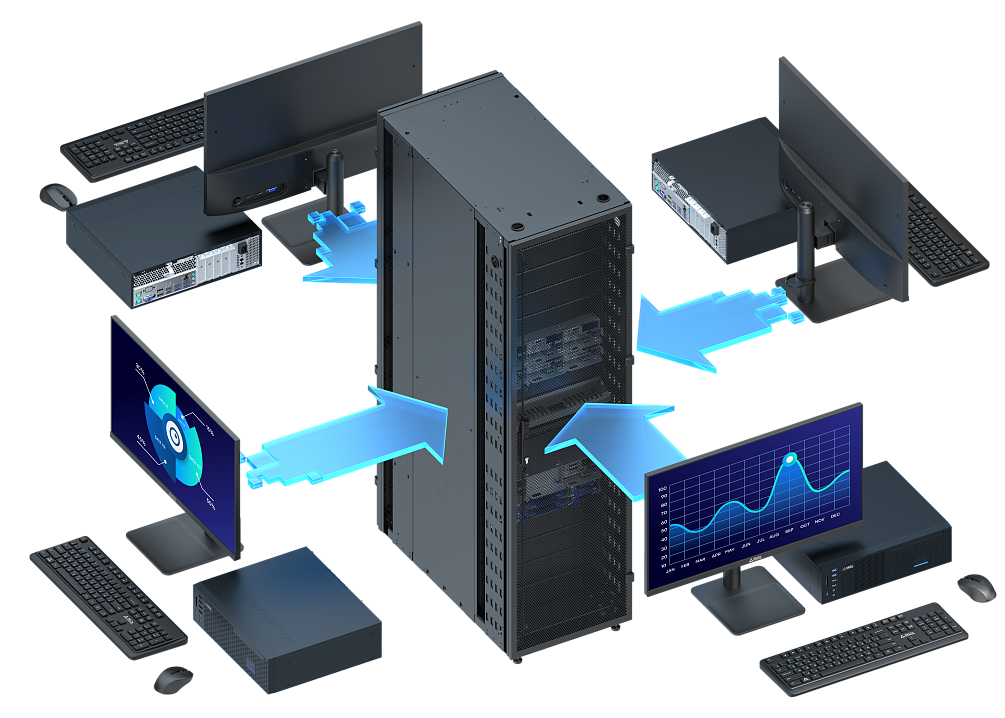
Traditional file storage is convenient when users work with folders and files, while block storage is suitable when applications need disk volumes with predictable latency. But backups, media content, logs, telemetry, documents, datasets, and archives grow differently: the number of objects keeps increasing, structures change, and capacity must be expanded without rebuilding the entire system.
Object storage addresses this challenge through horizontal scaling. New nodes and disks are added to the cluster, the software layer redistributes data, and applications continue to use the same S3-compatible interface. A unified namespace simplifies working with large datasets, while separating the API from specific hardware allows the infrastructure to evolve without changes to applications.
What a solution consists of
Delta Computers server hardware can serve as the hardware foundation for object storage. For example, Delta Orca is designed for object data and can be used to build data lakes and store unstructured information. Storage systems from the company's storage infrastructure portfolio are used for high-capacity configurations, allowing fast NVMe drives and high-capacity HDDs to be combined according to workload requirements.
The software layer is a Russian object storage platform with an S3-compatible API. It creates a unified storage space from disks across multiple servers, distributes objects among nodes, and manages storage policies. Depending on the software product selected, fault tolerance is provided through replication or erasure coding, while versioning and object-lock modes may be used for archival and backup data.
Delta BMC can be used for remote monitoring and administration of server hardware, while Delta Sokol can be used to monitor and manage IT infrastructure.
Technology partners